Legislative Changes in Accounting from 2026: Key Updates and Impacts

Legislative Changes in Accounting from 2026: Key Updates and Impacts

Legislative Changes in Accounting from 2026: Key Updates and Impacts

The end of 2025 and the beginning of 2026 brought a series of legislative changes in accounting that will significantly affect accounting practices, financial reporting, and the digitalization of documents.

Below is a brief overview of the most important changes effective from December 31, 2025, January 1, 2026, and January 1, 2027.

Changes effective from December 31, 2025

Finance lease (leasing) adjustments

With effect from December 31, 2025, the accounting treatment of finance leases has been aligned with the amendment to the VAT Act, under which finance leases are primarily treated as supplies of goods.

The definition of principal for the lessee has been clarified:

  • equality with the lessor’s principal is maintained only if a 100% VAT deduction is applied,

  • if the lessee does not apply the full VAT deduction, the non-deductible VAT increases the acquisition cost of the asset.

In addition, the lessee is required to recognize future finance costs, typically through the use of a clearing account (e.g. account 399).

These rules apply to contracts concluded after January 1, 2025.

Changes effective from January 1, 2026

Accounting for deposits of non-reserved minerals

From January 1, 2026, entities may separately recognize the value of mineral deposits from the value of land.

The accounting treatment depends on the use of the deposit:

  • if the entity carries out its own mining, the deposit is recorded in account 112,

  • if the land is leased to another mining operator, the deposit is recorded in account 029.

The amendment also introduces updated procedures for:

  • termination of mining activities,

  • termination of lease agreements before the deposit is fully extracted.

Accounting for VAT in selected situations

The legislative changes also clarify VAT accounting in several areas:

  • The non-deductible portion of the flat 50% VAT deduction for motor vehicles becomes part of the acquisition cost of the asset.

  • In the event of a change in the use of an asset, the adjustment of deducted VAT is recorded using accounting entries 548/343 or 343/648.

  • The treatment of VAT adjustments for bad debts under Sections 25a and 53b of the VAT Act has been clarified. All adjustments are recorded in analytical accounts linked to account 343.

Amendment to the regulation on individual financial statements

Changes have also been introduced in the preparation of individual financial statements for large entities and public interest entities.

The amendment:

  • removes disclosures that are no longer required by the Accounting Act,

  • clarifies the scope of mandatory disclosures for public undertakings.

These changes aim to simplify and improve the clarity of financial reporting.

Adjustments to annual reports and financial reporting

Legislative updates also affect annual reporting obligations:

  • Non-governmental organizations (NGOs) subject to audit no longer need to duplicate information in their annual reports if it is already included in the “NGO statement”.

  • Companies classified under industrial production with turnover exceeding EUR 250 million are no longer required to submit annual reports and general meeting records to the Ministry of Finance of the Slovak Republic.

  • Based on the Constitutional Court ruling No. 13/2026 Coll., provisions of Act No. 109/2025 Coll. have been repealed. These provisions required non-profit organizations to prepare and publish a transparency report, which is no longer mandatory as of February 4, 2026.

Changes effective from January 1, 2027

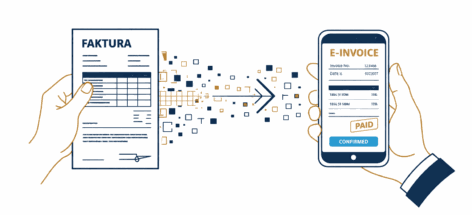
From January 1, 2027, the definition of an electronic accounting record will be updated in line with new electronic formats required for:

  • annual reports of entities reporting sustainability information,

  • reports containing income tax information,

  • electronic invoices under the VAT Act.

A key change is that:

  • the recipient’s consent will no longer be required for electronic invoicing.

However:

  • accounting records must be archived in the exact format in which they were originally created.

Similar Posts

Your subscription

As TPA Group, we strive to provide our customers with environmentally friendly products. Therefore, you can download all our publications as digital PDF files.

This site is registered on wpml.org as a development site. Switch to a production site key to remove this banner.